
Peanut butter jelly time.
Break tasks down for agents.
Published Oct 27, 2025 · Around 2 minutes to read
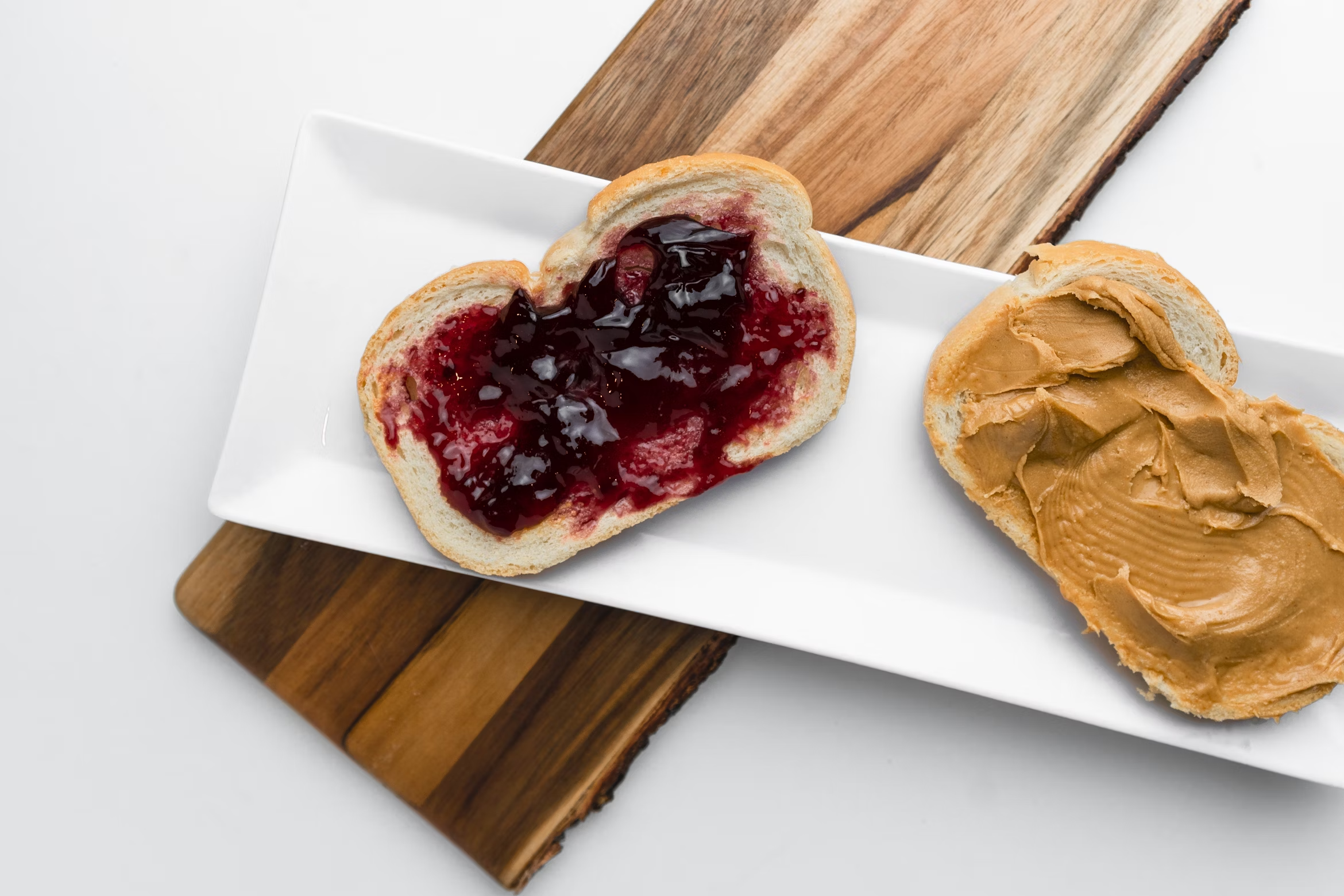
I did a team exercise once where we had to instruct a robot on how to make a PB&J sandwich. You had to be extremely precise. Any vagueness in your instructions (like “open the jar”) would be countered (which jar? where is the jar? how does the robot get to the jar?). It forced you to think algorithmically.
—
There’s a design tool called Task Analysis, which breaks down a complex task into smaller ones to understand how a user accomplishes a goal. We can replace “users” with “agents”:
- How does an agent begin the task?
- What tools does the agent need ?
- What do agents need to know in order to complete the task?
- How does an agent know when the task is complete?
—
Don’t let a single AI agent handle a multi-step workflow (3 or more steps). It’s better to break the workflow into smaller tasks. Then assign each subtask to a dedicated agent.
Here’s why:
- Each agent has its own memory, which keeps the context window small and tidy
- Smaller context window = less tokens used = cheaper
- It’s easier to debug the agent
- It’s faster
Going back to PB&J, you can also parallelize agents: two agents can apply spreads to different slices of bread, and an orchestrator agent can put them back together.
—
READ NEXT